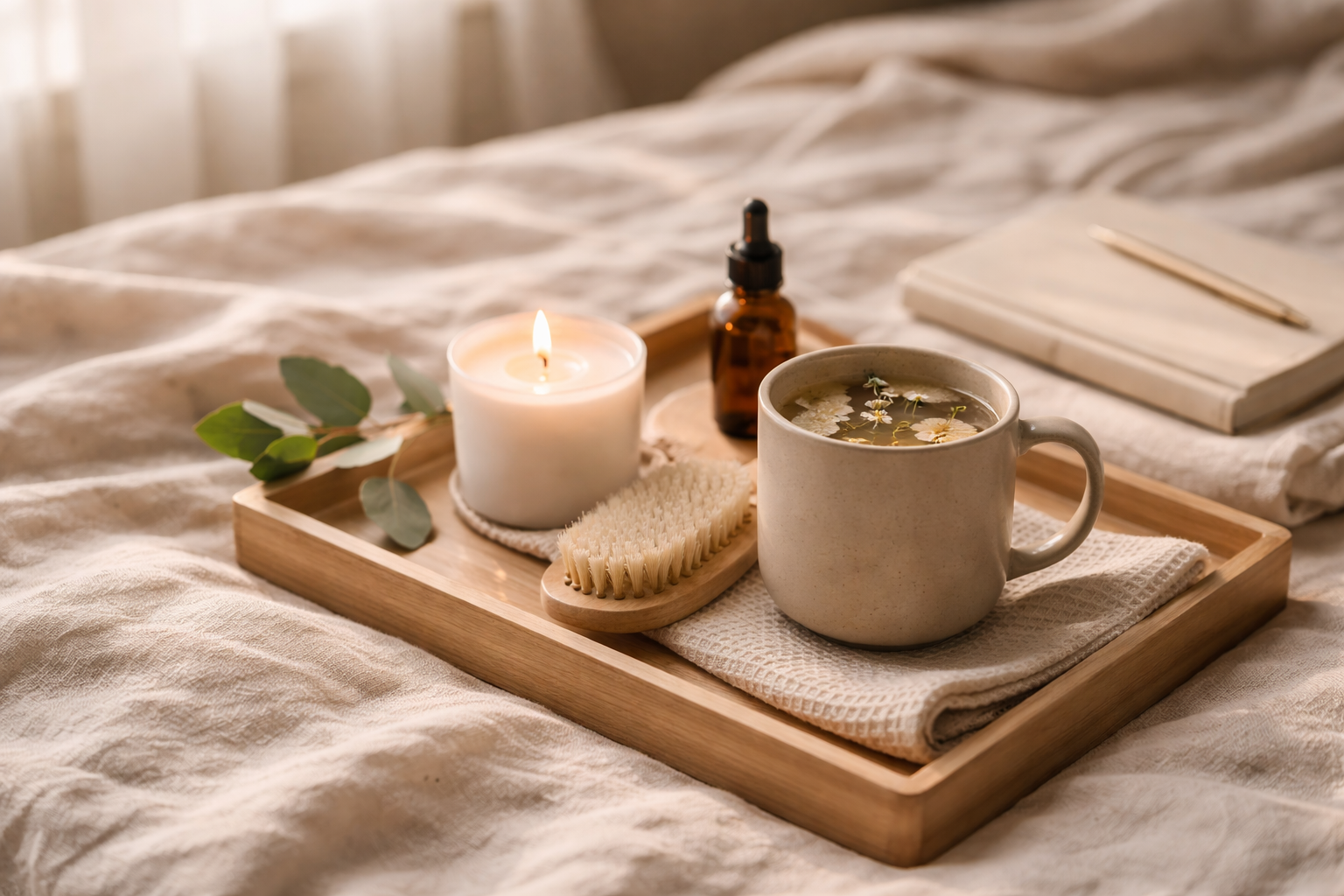
Self-care is often presented as something you either do perfectly or not at all.
Morning routines that start at dawn.
Daily rituals that require time, energy, and discipline.
Lists of habits that feel inspiring at first and overwhelming shortly after.
For a long time, I believed that if I couldn’t maintain an ideal routine, I was failing at taking care of myself. What I eventually realized is that self-care does not need to be impressive—it needs to be sustainable.
Balance begins with honesty.
A sustainable self-care routine is not built around what looks good online. It is built around your real life, your energy levels, and your current season.
Some days you have capacity.
Some days you do not.
Both deserve care.
The first step in creating balance is letting go of rigid expectations. Self-care should support you, not add another layer of pressure. When it becomes another task to complete or another standard to meet, it loses its purpose.
Instead of asking, “What routine should I follow?”
A more helpful question is, “What do I need right now?”
Sometimes the answer is rest.
Sometimes it is movement.
Sometimes it is quiet.
Sometimes it is boundaries.
Sustainable self-care focuses on small, repeatable practices rather than drastic changes. It might look like going to bed earlier instead of waking up earlier. It might mean taking a short walk to clear your mind instead of committing to an intense workout. It might mean saying no more often.
Balance is created through consistency, not intensity.
Another important part of self-care is recognizing emotional and mental needs. Caring for yourself is not limited to physical habits. It also includes checking in with your thoughts, noticing stress patterns, and giving yourself permission to slow down when life feels heavy.
You do not need to earn rest.
You do not need to justify taking care of yourself.
You do not need to wait until you are exhausted to begin.
A sustainable routine evolves with you. What works in one season may need adjustment in another, and that is not a failure—it is awareness.
True balance comes from flexibility, compassion, and self-trust.
When self-care fits into your life instead of competing with it, it becomes something you can return to again and again. And over time, those small acts of care create stability, clarity, and resilience.
Balance is not about doing more.
It is about doing what supports you—consistently and gently.
